Last updated: February 23, 2026
Table of Contents
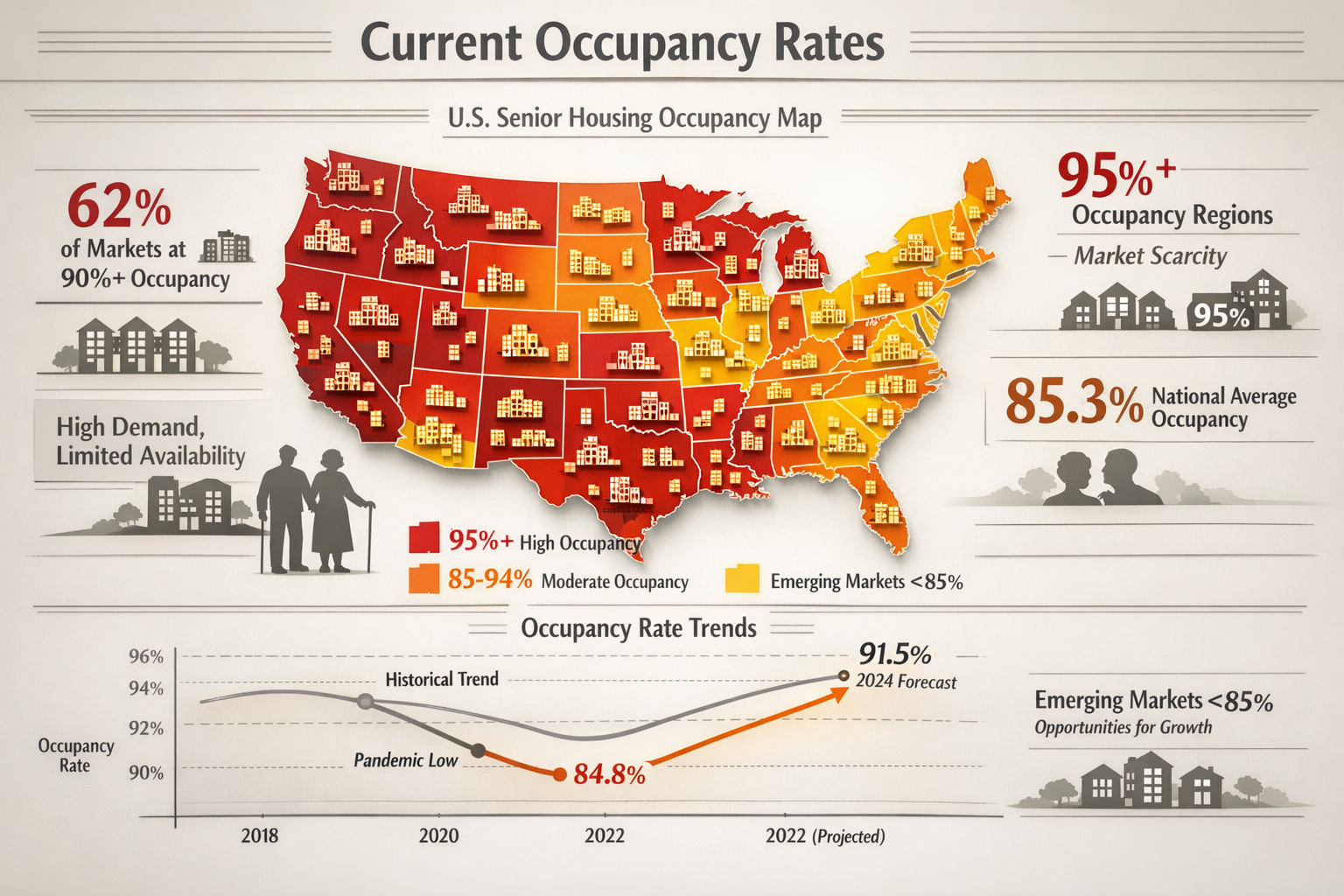
Senior Housing Trends 2026: High Occupancy & Limited Supply. The senior housing market in 2026 faces an unprecedented supply-demand imbalance. Senior housing trends shaping assisted living in 2026: high occupancy and limited supply are creating a landscape where occupancy rates have surged to 89.4% as of late 2025, with projections to exceed 90% this year—the highest levels in two decades[2][3]. For families searching for quality care, this means acting quickly and understanding how these market dynamics affect your options and costs.
This tight market stems from two converging forces: the oldest baby boomers turning 80 in 2026 and new construction falling to historic lows. The result is a seller’s market where premium communities fill quickly, wait lists grow longer, and pricing power shifts to providers. But this environment also means that occupied communities demonstrate strong demand and financial stability—reassuring factors when choosing a trusted care provider for your loved one.
Key Takeaways
- Occupancy rates reached 89.4% in late 2025 and are projected to exceed 90% in 2026, the highest level in 20 years of tracking[2][3]
- Independent living already surpassed 90% occupancy while assisted living is rapidly approaching pre-pandemic levels[1]
- New construction fell to just 1% growth in 2025, the lowest rate since 2006, with units under construction at only 2.3% of inventory[3][5]
- Net absorption outpaced new supply by 4.8 to 1 in 2025, meaning demand is consuming available units far faster than new communities open[5]
- The age 75+ population will grow by over 4 million people by 2030, establishing years of sustained demand[3][4]
- Asking rents are rising above 4% annually as communities exercise pricing power in a tight market[1]
- Families should start their search early and be prepared to make decisions quickly when quality options become available
- High occupancy signals community quality and financial stability, but also means fewer immediate openings
- Wait lists are becoming standard at desirable communities, requiring advance planning for your loved one’s care transition
- Understanding future cost projections helps families budget for rising expenses in this competitive market
Quick Answer
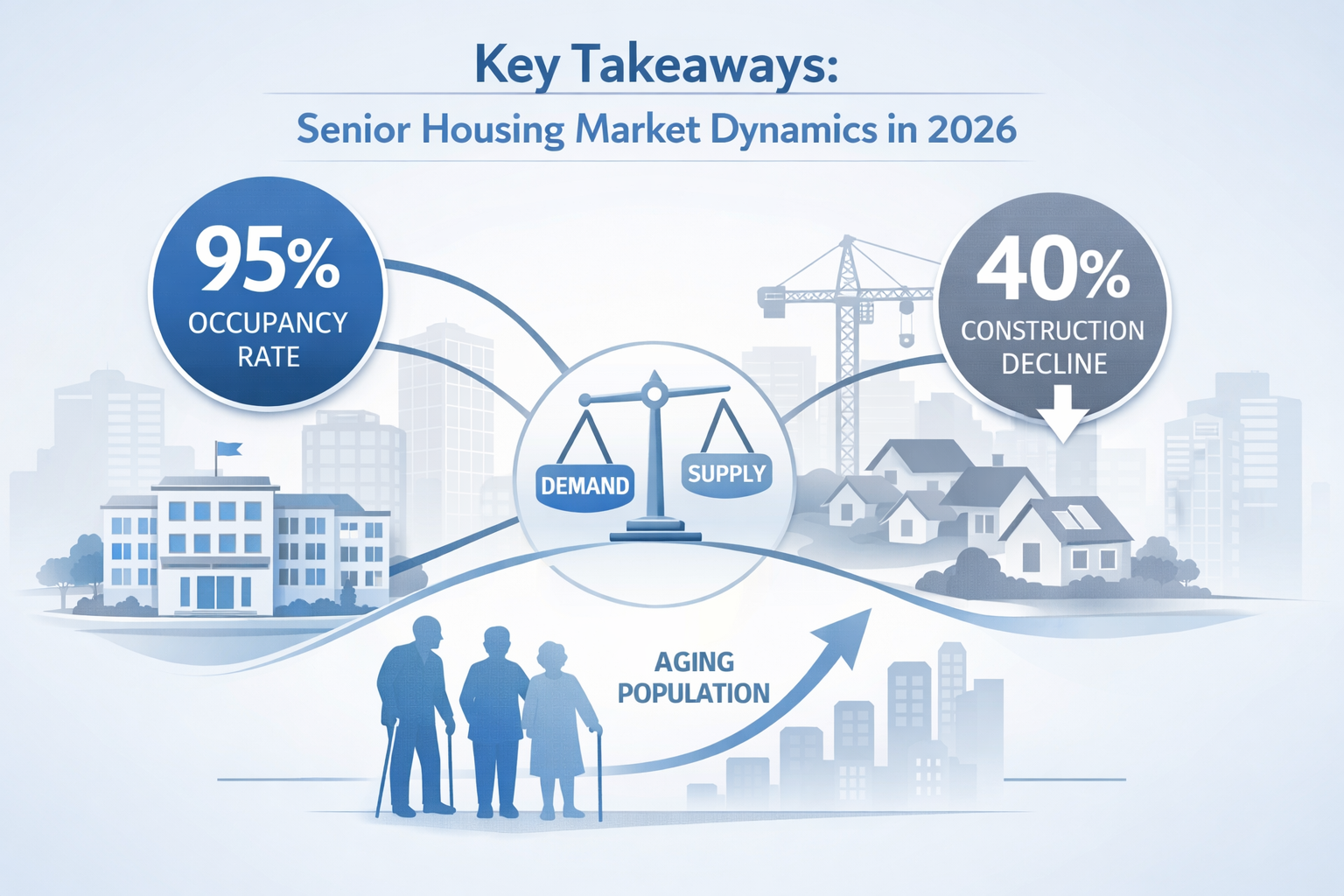
Senior housing trends shaping assisted living in 2026: high occupancy and limited supply mean families face a competitive market with fewer immediate openings and rising costs. Occupancy rates have climbed to 89.4% and are projected to exceed 90% this year, while new construction has fallen to historic lows of just 1% growth. The oldest baby boomers are turning 80 in 2026, driving unprecedented demand that outpaces supply by nearly 5 to 1. For families, this means starting your search early, being prepared to act quickly when quality options appear, and understanding that high occupancy often signals a well-run, financially stable community—though it also means longer wait lists and stronger pricing power for providers.
What Are the Current Occupancy Rates in Senior Housing for 2026?
Senior housing occupancy rates reached 89.4% across primary and secondary markets in the fourth quarter of 2025, marking the highest level since 2015[2]. Industry projections indicate occupancy will climb above 90% in 2026, potentially reaching the highest rate in the 20 years that NIC MAP has tracked this data[3].
The recovery varies by care level:
- Independent living communities exceeded 90% occupancy in 2025, demonstrating the strongest rebound[1]
- Assisted living facilities are approaching pre-pandemic occupancy levels, with steady quarterly gains throughout 2025[1]
- Memory care facilities maintain strong occupancy as demand for specialized dementia care continues growing
Individual Operator Performance
Real-world examples show this trend across different operators:
- Sonida Senior Living reported occupancy across 55 communities rose from 87.1% in Q3 2024 to 88.0% in Q2 2025[2]
- Brookdale Senior Living (the nation’s largest seniors housing operator) reported same-community occupancy of 83.3% in December 2025, up from 80.9% in December 2024[2]
- Cushman & Wakefield reported senior living valuations reached 90% occupancy in Q4 2025, marking 20 consecutive quarters of stabilized occupancy growth[5]
What This Means for Your Family
High occupancy rates signal several important factors when you’re searching for an assisted living residence:
Quality indicator: Communities with occupancy above 85% typically offer desirable amenities, compassionate caregivers, and strong reputations. Families choose these communities and stay there.
Limited immediate availability: You may encounter wait lists at the most sought-after communities. Starting your search 3-6 months before your loved one needs to move gives you more options.
Financial stability: High occupancy means the community has consistent revenue to maintain staffing levels, upgrade facilities, and provide quality care. This matters for long-term care planning.
Pricing power: Communities operating near capacity can be selective about discounts or move-in incentives. Understanding assisted living residence couples pricing structure helps you negotiate effectively even in a tight market.
Why Is New Construction of Senior Housing at Historic Lows?
New inventory growth fell to just 1% in 2025, the lowest year-over-year growth rate since NIC began tracking data in 2006[3]. Senior housing completions have fallen 73% since 2021, with units under construction at only 2.3% of inventory—the lowest level since 2012[5].
Several factors explain this dramatic slowdown:
Economic and Financial Barriers
Higher interest rates increased borrowing costs for developers throughout 2024-2025, making new projects less financially viable. Construction loans that were affordable at 3-4% interest rates became prohibitively expensive at 6-8%.
Rising construction costs for materials and labor squeezed project budgets. Developers faced 20-30% cost increases compared to pre-pandemic estimates, forcing many to postpone or cancel planned communities.
Stricter lending standards from banks made it harder to secure financing. Lenders became more cautious about senior housing projects after market volatility in 2020-2022.
Regulatory and Site Challenges
Zoning approval delays in many municipalities slow the development timeline. Communities often face local opposition, requiring 12-24 months just for approvals before breaking ground.
Labor shortages in skilled construction trades extend build times and increase costs. Finding qualified workers for specialized senior housing construction remains challenging.
Site acquisition costs have risen in desirable locations where seniors want to live—near family, medical facilities, and familiar neighborhoods.
Market Timing Concerns
Developers who started projects in 2020-2021 faced uncertainty about future demand during the pandemic. Many paused or canceled projects, creating the current supply gap.
Long development cycles mean projects approved today won’t open until 2027-2028, creating a multi-year lag between recognizing demand and delivering new units.
The Supply-Demand Gap
The industry would need to develop new communities at twice its maximum historical pace for the next 20 years just to maintain 90% occupancy levels given current demand projections[4]. This is simply not feasible given construction capacity, financing constraints, and regulatory timelines.
For families, this means the supply shortage will persist for years. Planning ahead and understanding assisted living residence property requirements by state helps you identify which communities are expanding or renovating to add capacity.
How Does the Aging Baby Boomer Population Impact Senior Housing Demand?
The oldest baby boomers turn 80 in 2026, driving senior housing demand to record levels[3]. This demographic shift represents the single largest factor shaping the senior care market for the next two decades.
The Numbers Behind the Trend
The age 75+ population is expected to grow by more than 4 million people by 2030 according to U.S. Census Bureau projections, establishing a years-long demand runway[3][4]. This age group represents the primary market for assisted living residence services, as care needs typically increase significantly after age 75.
Key demographic milestones:
- 2026: First baby boomers (born 1946) turn 80
- 2030: The 75+ population reaches approximately 28 million Americans
- 2034: All baby boomers will be age 70 or older
- 2040: The 85+ population (highest care needs) will nearly double from 2020 levels
Why Age 75+ Matters for Assisted Living
Families typically begin exploring assisted living residence options when loved ones reach their mid-to-late 70s. At this age, common triggers include:
- Difficulty managing medications safely and independently
- Mobility challenges that increase fall risk
- Early cognitive changes requiring supervision
- Social isolation after losing a spouse or friends
- Inability to maintain a home safely
The surge in the 75+ population means millions more families will face these decisions simultaneously, creating sustained demand pressure on available communities.
Regional Variations
Demand growth varies by location:
Sunbelt states (Florida, Arizona, Texas, North Carolina) see the highest growth as baby boomers relocate for retirement. These markets face the tightest supply-demand balance.
Midwest and Northeast states experience steady growth as aging-in-place boomers eventually need care. These regions often have older housing stock requiring updates.
Suburban communities near major metro areas see strong demand as families want loved ones close by for regular visits.
What This Means for Your Planning
Start conversations early: Don’t wait for a crisis. Discuss preferences with your loved one while they can actively participate in decisions about their future care.
Expect competition: In high-demand markets, desirable communities may have 6-12 month wait lists. Getting on these lists early preserves your options.
Consider aging-in-place alternatives: For seniors not yet ready for assisted living, home care services can delay the transition while you research communities.
Plan financially: With demand outpacing supply, expect continued rent increases. Understanding assisted living residence monthly fees explained line by line helps you budget accurately.
What Is the Current Supply-Demand Ratio in Senior Housing Markets?
Net absorption outpaced supply growth by 4.8 to 1 in 2025[5]. This means for every new unit that opened, nearly five existing units were filled by new residents. Absorption averaged over 30,000 units annually over the past four years while supply increased by just over 10,000 units annually[2].
Understanding Absorption vs. Supply
Absorption measures how many units transition from vacant to occupied during a period. High absorption indicates strong demand and limited available inventory.
Supply growth measures new units added through construction completions and conversions. Low supply growth indicates limited new development.
The 4.8 to 1 ratio means demand is consuming available units far faster than the market can create new ones, tightening occupancy and reducing options for families.
Market Implications by Region
Primary markets (major metropolitan areas like New York, Los Angeles, Chicago, Boston) show absorption rates of 5-6 to 1, with virtually no immediate availability at top-tier communities.
Secondary markets (mid-sized cities like Austin, Charlotte, Nashville, Portland) experience 3-4 to 1 ratios, offering slightly more flexibility but still tight conditions.
Tertiary markets (smaller cities and rural areas) may have more balanced ratios, but often have fewer total options and less specialized care like memory care facilities.
Consequences for Families Searching for Care
This imbalance creates several practical challenges:
Longer wait times: Families may wait 3-12 months for an opening at their preferred community, requiring interim care solutions.
Reduced negotiating power: With multiple families competing for limited openings, communities have less incentive to offer move-in discounts or waive fees.
Pressure to decide quickly: When an opening appears, you may have 24-72 hours to commit before it goes to another family on the wait list.
Limited room choice: You may not get your preferred room type (private vs. shared, specific floor, view preference) and need to accept what’s available. Understanding assisted living residence private room vs shared room costs helps you make informed trade-offs.
Strategic Approaches for Families
Apply to multiple communities: Don’t put all your hopes on one facility. Submit applications to your top 3-5 choices to increase your odds.
Stay in regular contact: Call monthly to update your situation and remind them you’re actively waiting. This keeps you top-of-mind when openings occur.
Be flexible on timing: If you can be ready to move within days rather than weeks, you’ll have more opportunities.
Consider temporary solutions: Short-term respite care services can bridge the gap while you wait for your preferred long-term placement.
How Are Pricing and Rents Changing in the Senior Housing Market?
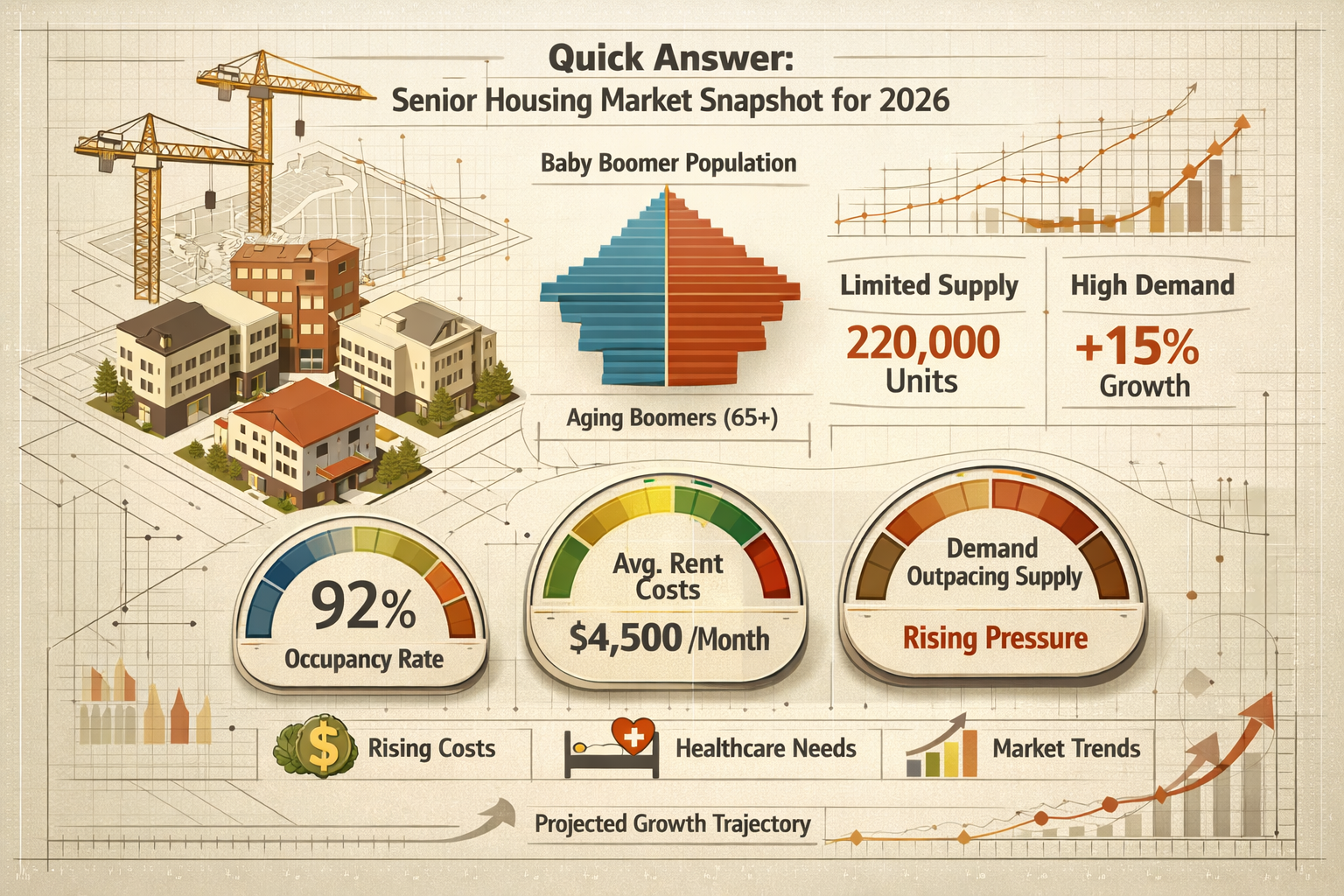
Asking rents are stabilizing above 4% annually across both independent and assisted living, reflecting consistent pricing power in a balanced market[1]. This represents a return to historical growth rates after the volatility of 2020-2022.
Current Rent Trends
Independent living communities are seeing rent increases of 4-5% annually, driven by high occupancy and strong demand from active seniors seeking maintenance-free living.
Assisted living residence rents are rising 4-4.5% annually, with premium communities and those offering specialized services commanding higher increases.
Memory care facilities experience the highest rent growth at 5-6% annually, reflecting limited supply of specialized dementia care and intensive staffing requirements.
Regional Pricing Variations
High-cost markets (California, New York, Massachusetts, Washington) see base rents of $5,000-$8,000+ monthly for assisted living, with annual increases of $200-$350 per month.
Moderate-cost markets (Texas, Florida, Arizona, North Carolina) range from $3,500-$5,500 monthly, with annual increases of $150-$200 per month.
Lower-cost markets (Midwest, rural areas, smaller cities) start at $2,800-$4,000 monthly, with annual increases of $100-$150 per month.
Factors Driving Rent Increases
Labor costs: Compassionate caregivers deserve competitive wages, and staffing represents 60-70% of operating costs. Minimum wage increases and competition for healthcare workers push costs higher.
Insurance and liability: Medical malpractice and general liability insurance costs have risen 15-25% for senior care providers in recent years.
Utilities and maintenance: Energy costs, property taxes, and routine maintenance increase with inflation.
Amenity expectations: Today’s seniors expect higher-quality dining, technology integration, wellness programs, and engaging activities—all requiring investment.
Regulatory compliance: Meeting evolving safety standards, staffing requirements, and reporting obligations adds administrative costs.
What Families Should Expect
Annual rent increases are standard: Most communities include provisions for annual adjustments in their contracts, typically 3-5% or tied to CPI.
Move-in specials are rare: In a tight market, communities don’t need to offer discounts to fill units. Expect to pay full published rates.
Premium for preferred rooms: Private rooms, specific locations, larger units, or special features command 10-30% premiums over base rates.
Additional service fees: Beyond base rent, expect charges for medication management, additional assistance with activities of daily living, specialized diets, and other personalized care plans. Review assisted living residence dietary restriction policies to understand potential add-on costs.
Financial Planning Strategies
Budget for 4-5% annual increases: When calculating long-term affordability, assume rents will rise $150-$250 monthly each year.
Lock in rates when possible: Some communities offer rate guarantees for the first 12-24 months. Take advantage of these when available.
Understand your contract: Know when and how rent increases are communicated. Most states require 30-60 days notice.
Explore payment options: Some families use long-term care insurance, veterans benefits, or Medicaid planning to manage costs. Consult with an elder care financial advisor.
Consider couples pricing: If both spouses need care, assisted living residence couples pricing structure often provides better value than two separate arrangements.
What Does High Occupancy Mean for Quality of Care and Family Choice?
High occupancy rates above 85-90% create both opportunities and challenges for families seeking quality care for their loved ones. Understanding these dynamics helps you make informed decisions and set realistic expectations.
Positive Indicators of High Occupancy
Community reputation: When a community consistently maintains high occupancy, it signals that families trust the care, residents are satisfied, and word-of-mouth recommendations are strong.
Financial stability: Steady occupancy means predictable revenue, allowing the community to invest in staff training, facility maintenance, and program improvements rather than struggling to cover fixed costs.
Vibrant community life: Full communities offer more robust social activities, diverse dining options, and engaging programs because there’s a critical mass of residents to participate.
Staff retention: Financially stable communities can offer competitive wages and benefits, reducing turnover among compassionate caregivers and creating continuity of care.
Lower closure risk: Communities operating at 85%+ occupancy are unlikely to close or change ownership abruptly, providing peace of mind for long-term planning.
Challenges Created by Limited Availability
Reduced immediate options: You may not find openings at your top-choice communities when you need them, requiring flexibility or interim solutions.
Wait list management: Getting on multiple wait lists requires organization, regular follow-up, and readiness to move quickly when openings occur.
Limited room selection: You might need to accept a shared room initially and wait for a private room to open, or take a less desirable location within the building.
Pressure to decide quickly: When an opening appears, communities may give you 24-72 hours to commit, leaving little time for additional tours or family discussions.
Less negotiating power: Communities at capacity have little incentive to waive fees, offer discounts, or make special accommodations.
Ensuring Quality in a Tight Market
Just because a community has high occupancy doesn’t automatically guarantee quality care. Use these strategies to evaluate communities thoroughly:
Tour multiple times: Visit during different times of day and days of the week. Observe meal times, activity periods, and evening routines.
Talk to current residents and families: Ask about their experiences with staff responsiveness, care quality, and how the community handles concerns.
Review inspection reports: Check state licensing databases for citations, complaints, and corrective actions. Understand assisted living residence operational audits to interpret findings.
Assess staffing levels: Ask about staff-to-resident ratios during different shifts. Inquire about caregiver training requirements and turnover rates.
Evaluate safety systems: Look for assisted living residence emergency call systems in rooms and common areas.
Understand care capabilities: Clarify what level of care the community can provide and what would trigger a transfer to a higher care level or nursing home.
Review contracts carefully: Understand fee structures, rate increase policies, discharge criteria, and refund terms before signing.
Making the Best Choice When Options Are Limited
Prioritize must-haves vs. nice-to-haves: Determine which features are non-negotiable (location, care level, safety) and which are preferences (amenities, room size, décor).
Consider phased transitions: Your loved one might start in a less-ideal situation temporarily while waiting for an opening at your preferred community.
Explore home care bridges: Home care services can provide support at home while you wait for the right assisted living placement.
Stay on multiple wait lists: Don’t cancel other applications until your loved one is settled and you’re confident in the placement.
Plan for care progression: Choose communities that offer multiple care levels so your loved one won’t need to move again as needs increase.
How Should Families Navigate the Competitive Senior Housing Market in 2026?
Senior housing trends shaping assisted living in 2026: high occupancy and limited supply require families to approach their search strategically and proactively. Here’s a practical roadmap for finding quality care in a competitive market.
Start Your Search Early
Timeline for planning: Begin researching options 6-12 months before you anticipate needing care. This gives you time to tour communities, get on wait lists, and make thoughtful decisions rather than rushed choices during a crisis.
Crisis planning: If you’re facing an immediate need (hospital discharge, sudden decline, caregiver burnout), focus on the top 2-3 available options and plan for a possible future transfer to your ideal community.
Preventive approach: Even if your loved one is managing well at home, start conversations about preferences and visit a few communities together. This reduces stress when the time comes.
Research and Identify Your Top Choices
Use trusted directories: Start with comprehensive resources like Assisted Living Residence Directory to identify communities in your target area that match your loved one’s care needs and preferences.
Narrow by location: Choose communities within a reasonable distance for regular family visits—typically 15-30 minutes from where you or other family members live.
Match care level to needs: Be realistic about current and anticipated care requirements. Communities that can accommodate increasing needs prevent future moves.
Consider specialized services: If your loved one has dementia, look for dedicated memory care facilities with trained staff and secure environments.
Check financial fit: Identify communities within your budget, including room for annual increases. Be honest about what you can afford long-term.
Tour Strategically
Schedule multiple tours: Visit your top 5-7 communities, taking notes and photos to help you remember and compare.
Bring a checklist: Evaluate each community on consistent criteria—cleanliness, staff interaction, resident engagement, safety features, dining quality, and overall atmosphere.
Ask specific questions:
- What are current staff-to-resident ratios on each shift?
- How do you handle medical emergencies? Review assisted living residence emergency medical response protocol.
- What’s your average wait time for an opening?
- How often do residents transfer to higher care levels?
- What activities and programs do you offer?
- How do you accommodate special dietary needs?
Observe staff interactions: Watch how caregivers interact with residents. Are they patient, respectful, and attentive? Do they call residents by name?
Talk to residents: Ask current residents about their experiences. Are they happy? Do they feel safe? Would they recommend the community?
Get on Wait Lists Promptly
Apply to multiple communities: Submit applications to your top 3-5 choices. Application fees are a small investment compared to settling for a less desirable option.
Understand wait list policies: Some communities prioritize by application date, others by care urgency or financial qualifications. Know where you stand.
Stay in contact: Call or email monthly to update your situation and confirm your continued interest. This keeps you visible when openings occur.
Update your information: If your loved one’s condition changes, notify communities immediately. Increased care needs might move you up the list.
Prepare for Quick Decisions
Have finances ready: Know your payment method (private pay, long-term care insurance, veterans benefits) and have funds accessible for deposits and first month’s rent.
Complete paperwork in advance: Fill out applications, gather medical records, and prepare financial documentation before you need it.
Make family decisions ahead: Discuss and agree on criteria for accepting an opening so you’re not debating when time is short.
Arrange move logistics: Have a plan for packing, moving, and settling your loved one quickly if an opening appears.
Consider Interim Solutions
Home care services: Professional caregivers can provide support at home while you wait for assisted living openings. Explore home care services private duty care explained for options.
Respite care: Short-term stays in communities can provide temporary relief and let you evaluate the environment.
Adult day programs: These services offer daytime supervision and activities while family caregivers work or rest.
Temporary placements: Some families accept an available opening at a less-preferred community as a bridge while waiting for their top choice.
Advocate for Your Loved One
Understand rights and protections: Familiarize yourself with assisted living residence resident autonomy rights to ensure proper treatment.
Communicate clearly: Share your loved one’s preferences, routines, and needs with staff to support personalized care plans.
Stay involved: Visit regularly, attend care plan meetings, and maintain open communication with staff and administration.
Address concerns promptly: If issues arise, speak with the appropriate staff member or administrator right away. Document concerns and follow up.
Know escalation paths: Understand how to file complaints with the community and, if necessary, with state licensing agencies.
Plan for the Long Term
Anticipate care progression: Choose communities that can accommodate increasing needs so your loved one can age in place.
Budget for increases: Plan for 4-5% annual rent increases when evaluating long-term affordability.
Review contracts annually: Understand terms around rate increases, discharge policies, and service changes.
Maintain family involvement: Regular visits and communication ensure your loved one receives consistent, quality care and feels connected.
What Are the Investment and Valuation Trends in Senior Living Real Estate?
Senior living valuations experienced significant recovery in 2025, up over 10% year-over-year, with capitalization rates compressing by 25 to 50 basis points[5]. These trends reflect growing investor confidence in the sector’s fundamentals and long-term demand outlook.
Why Investment Trends Matter to Families
While real estate investment may seem removed from your search for care, these trends directly impact your experience:
Community stability: Strong investor interest means communities are well-funded, reducing risk of sudden closures or deferred maintenance.
Renovation and upgrades: New ownership often brings capital for improvements—updated rooms, enhanced amenities, better technology.
Operational changes: Ownership transitions can mean new management, different policies, or changes to staff. Understanding assisted living residence move-out process helps you know your options if changes aren’t positive.
Pricing implications: Investors expect returns, which may translate to rent increases or reduced discounting.
Current Investment Landscape
Institutional investors (REITs, private equity, pension funds) are increasing allocations to senior housing, viewing it as a stable, recession-resistant asset class with demographic tailwinds.
Capitalization rate compression (from roughly 7.5% to 7.0% on average) indicates investors are willing to pay more for properties, reflecting confidence in future income growth.
Preferred assets include:
- Communities with occupancy above 85%
- Properties in high-growth Sunbelt markets
- Facilities with multiple care levels (independent living, assisted living, memory care)
- Well-maintained properties requiring minimal capital investment
Transaction volume increased in 2025 as interest rates stabilized and occupancy recovery validated the sector’s strength.
What Families Should Watch
Ownership transitions: If your loved one’s community is sold, you’ll typically receive notice. Ask about planned changes to operations, staffing, or policies.
Capital improvements: New ownership often means renovations. Understand how this might affect your loved one’s room or routines during construction.
Management changes: New operators may bring different philosophies about care delivery, activities, or family communication.
Contract terms: Review whether ownership changes affect your existing contract or allow you to terminate without penalty.
The strong investment environment generally benefits families by ensuring communities have the capital to maintain quality and expand capacity, though it also reinforces the pricing power providers hold in a tight market.
What Alternative Senior Care Options Exist in a Tight Market?
When assisted living residence openings are limited, families should understand alternative care options that can meet your loved one’s needs either temporarily or long-term.
Home Care Services
Professional caregivers provide support in your loved one’s own home, allowing them to age in place while receiving necessary assistance.
Services include:
- Personal care (bathing, dressing, grooming)
- Medication reminders
- Meal preparation
- Light housekeeping
- Companionship and supervision
- Transportation to appointments
Best for: Seniors who need assistance with daily activities but don’t require 24/7 supervision or extensive medical care.
Considerations: Costs can exceed assisted living if round-the-clock care is needed. Home safety modifications may be required. Learn more about home care services caregiver training requirements to ensure quality.
Adult Day Programs
These programs provide daytime supervision, activities, and meals in a community setting while family caregivers work or rest.
Best for: Seniors who can remain at home but need daytime engagement and supervision, particularly those with early dementia.
Considerations: Requires transportation to and from the program. Doesn’t provide overnight care or assistance.
Respite Care Services
Short-term care (days to weeks) in a residential facility gives family caregivers a break while ensuring loved ones receive professional care.
Best for: Temporary situations—caregiver vacation, recovery from illness, trial period before permanent placement.
Considerations: Availability may be limited in tight markets. Costs are typically higher per day than long-term rates.
Independent Senior Living
For seniors who don’t yet need hands-on care assistance, independent living communities offer maintenance-free housing with social activities and amenities.
Best for: Active seniors who can manage personal care independently but want community, convenience, and future care access.
Considerations: Limited care services available. May require future transfer to assisted living as needs increase.
Nursing Home Care
Skilled nursing facilities provide 24/7 medical care for seniors with complex health needs beyond what assisted living can accommodate.
Best for: Seniors requiring extensive medical monitoring, rehabilitation after hospitalization, or end-of-life care.
Considerations: More institutional environment. Higher costs. Understanding nursing home bed availability tracking guide helps you navigate this option.
Family Caregiving with Support Services
Family members provide primary care with professional support services filling gaps.
Support options:
- Home health aides for personal care
- Visiting nurses for medical needs
- Meal delivery services
- Medical alert systems
- Home modifications for safety
Best for: Families with available caregivers and seniors comfortable with family providing intimate care.
Considerations: Caregiver burnout is common. Long-term sustainability can be challenging. Financial and emotional costs to family caregivers are significant.
Choosing the Right Alternative
Match care level to needs: Be realistic about what your loved one requires and what each option can provide.
Consider sustainability: Can this solution work for months or years, or is it a temporary bridge?
Evaluate costs: Compare total costs including services, modifications, and hidden expenses.
Assess family capacity: Be honest about what family members can realistically provide without sacrificing their own health and wellbeing.
Plan for progression: Most alternatives work best when combined with a plan for transitioning to higher care levels as needs increase.
Frequently Asked Questions
What is the average occupancy rate for assisted living in 2026?
Assisted living occupancy rates are approaching 90% in 2026, with the overall senior housing sector reaching 89.4% in late 2025 and projected to exceed 90% this year[2][3]. Independent living already surpassed 90% occupancy in 2025[1]. These are the highest rates in two decades, reflecting strong demand and limited new supply.
How long are wait lists for assisted living communities in 2026?
Wait lists typically range from 3-12 months at desirable communities in high-demand markets, though this varies significantly by location and care level. Premium communities in competitive markets may have longer waits, while smaller cities or less-sought-after facilities may have immediate openings. Contact communities directly to understand current wait times and your position on their list.
Why is there so little new assisted living construction happening?
New construction fell to just 1% growth in 2025 due to higher interest rates, increased building costs, labor shortages, and stricter lending standards[3]. Units under construction represent only 2.3% of inventory, the lowest since 2012[5]. These financial and regulatory barriers make new development challenging even as demand surges.
How much are assisted living costs increasing annually?
Assisted living rents are rising 4-4.5% annually on average, with regional variations[1]. This translates to approximately $150-$250 per month increases each year depending on your base rate and location. Premium communities and those with specialized services may see higher increases. Budget for these annual adjustments when evaluating long-term affordability.
Should I accept a shared room while waiting for a private room?
This depends on your loved one’s preferences and needs. Shared rooms cost 20-30% less than private rooms and may have shorter wait times. If your loved one is social and adaptable, a shared room can work well temporarily. If they value privacy or have sleep disturbances, behavioral issues, or strong preferences, waiting for a private room may be worth it. Review assisted living residence private room vs shared room costs to understand the trade-offs.
What happens if my loved one’s care needs increase beyond what assisted living provides?
Most assisted living communities have defined care limitations. When needs exceed their capabilities, they’ll work with you to transition your loved one to a higher care level—either a memory care unit, skilled nursing facility, or nursing home. Understanding discharge policies before admission helps you plan. Some communities offer multiple care levels on one campus, allowing aging in place without moving to a new location.
How can I tell if high occupancy means good quality or just limited options?
High occupancy alone doesn’t guarantee quality. Evaluate communities thoroughly by touring multiple times, reviewing state inspection reports, talking to current residents and families, assessing staff interactions, and checking online reviews. High occupancy combined with clean inspection records, engaged residents, attentive staff, and positive family feedback indicates genuine quality. High occupancy with complaints, citations, or visible problems suggests limited alternatives rather than excellence.
Are there financial assistance options for assisted living?
Most assisted living is private pay, but some assistance exists. Veterans Aid and Attendance benefits can provide $1,000-$2,000 monthly. Some states offer Medicaid waivers for assisted living (though availability is limited). Long-term care insurance may cover part of the cost. Some communities offer financial assistance or sliding scale fees. Consult with an elder law attorney or financial advisor to explore options specific to your situation.
What should I do if my top-choice community has a long wait list?
Get on the wait list immediately and stay in regular contact. Simultaneously apply to 2-3 backup communities that meet your essential criteria. Consider interim solutions like home care services or respite care to bridge the gap. Ask if the community offers respite stays that might lead to permanent placement. Be ready to move quickly when an opening occurs—have finances, paperwork, and moving logistics prepared in advance.
How do I know when it’s time to move from home care to assisted living?
Common triggers include: safety concerns (frequent falls, wandering, medication errors), caregiver burnout, social isolation, inability to manage daily activities, cognitive decline requiring supervision, or medical needs beyond what home care can provide. If your loved one’s quality of life is declining at home or family caregivers are overwhelmed, it’s time to seriously consider assisted living. Consult with their physician and care team for professional assessment.
Can I negotiate pricing in a tight market?
Negotiating power is limited when occupancy is high, but you can try. Ask about move-in specials, waived community fees, or rate locks for the first year. Couples may receive discounts. Veterans, former employees of affiliated organizations, or referrals might qualify for reductions. Be prepared to pay published rates, but asking costs nothing. Focus negotiations on value-adds like priority wait list placement or room preferences rather than just price.
What questions should I ask during a community tour?
Ask about current occupancy and wait times, staff-to-resident ratios on all shifts, staff training and turnover rates, how they handle medical emergencies, what services are included vs. additional fees, their policy on care level changes and discharges, activity programming, dining options and dietary accommodations, how they communicate with families, and what their COVID-19 and infection control protocols are. Request to see a contract and fee schedule before committing.
Conclusion
Senior housing trends shaping assisted living in 2026: high occupancy and limited supply create a challenging but navigable landscape for families seeking quality care. Occupancy rates approaching 90%, new construction at historic lows, and the oldest baby boomers turning 80 this year combine to produce unprecedented demand pressure on available communities.
For your family, this means planning ahead, starting your search early, and being prepared to act quickly when quality options become available. High occupancy signals community strength and desirability, but also requires flexibility and patience as you navigate wait lists and limited immediate openings.
The tight market will persist for years given the demographic wave of aging boomers and the multi-year lag in developing new communities. Understanding these dynamics helps you set realistic expectations and make informed decisions during an important life transition.
Your Next Steps
Start your research today: Even if your loved one doesn’t need care immediately, begin identifying communities that match your preferences and budget. Familiarity with options reduces stress when the time comes.
Visit communities in person: Tours reveal far more than websites or brochures. Observe staff interactions, resident engagement, cleanliness, and overall atmosphere at multiple times of day.
Get on wait lists early: If you’ve identified preferred communities, submit applications now. Wait times of 6-12 months are common, and getting on lists preserves your options.
Prepare financially: Understand total costs including base rent, care fees, and annual increases. Budget for 4-5% growth each year. Explore payment options and assistance programs.
Consider interim solutions: Home care services, respite care, or adult day programs can bridge gaps while you wait for ideal placements.
Stay informed: Market conditions evolve. Regular communication with communities keeps you updated on availability and changes.
Involve your loved one: When possible, include them in tours, discussions, and decisions. Their preferences and comfort matter most.
Seek professional guidance: Elder care advisors, geriatric care managers, and elder law attorneys can provide valuable expertise during this transition.
The senior housing market in 2026 demands proactive planning and strategic decision-making, but quality care options exist for families willing to invest time in research and preparation. Your loved one deserves compassionate caregivers, a safe and secure environment, and the opportunity for aging with dignity. Starting your search today positions you to find the right community even in a competitive market.
Remember that high occupancy often indicates a thriving, well-managed community where residents receive quality care and families find peace of mind. While the search may require patience and persistence, the result—a trusted care provider where your loved one can thrive—makes the effort worthwhile.
Related Reading
- Assisted Living Residence Future Cost Projections
- Assisted Living Residence Monthly Fees Explained Line By Line
- Assisted Living Residence Couples Pricing Structure
- Assisted Living Residence Private Room Vs Shared Room Costs
- Nursing Home Bed Availability Tracking Guide
- Home Care Services Private Duty Care Explained
References
[1] Five Senior Housing Trends Shaping Industry 2026 – https://www.hmpglobalevents.com/article/five-senior-housing-trends-shaping-industry-2026
[2] Steady Growth Accelerates 2026 Seniors Housing And Healthcare Market Outlook – https://www.lument.com/steady-growth-accelerates-2026-seniors-housing-and-healthcare-market-outlook/
[3] Senior Housing – https://www.pwc.com/us/en/industries/financial-services/asset-wealth-management/real-estate/emerging-trends-in-real-estate-pwc-uli/property-type-outlook/senior-housing.html
[4] Top Senior Living Trends For 2026 – https://seniorhousingnews.com/2026/01/05/top-senior-living-trends-for-2026/
[5] Senior Living And Care Investor Survey And Trends Report – https://www.cushmanwakefield.com/en/united-states/insights/senior-living-and-care-investor-survey-and-trends-report